Showing posts with label Economics. Show all posts

Friday, October 21, 2011

March for Occupy Boston

Take a gander at my photos from the 10/15/11 march in Boston in support of Occupy Boston. Samples below.


Monday, February 22, 2010

Google Results League Table: "_______ is Theft"

FURTHER UPDATE (Mar 2, 2010 4:50 PM): In what has now become a world-class blogalicious cock-up, commenter Albert Esplugas reports that he cannot reproduce Hans's figures. And I couldn't either, at least I couldn't yesterday. But now I can again. Not sure what is going on. Anyway, be wary of any reference to the number of Google results that some phrase or other supposedly returns. I'm clearly out of my depth here.


RETRACTION (Feb 25, 2010 2:12 PM): Commenter Hans has found a serious fault in my Google phrase search methods. I tried a "* is theft" search and noted the top responses that came up in the auto-complete box. But Hans simply typed in some other phrases and found the following:
"sex is theft": 40,400
"love is theft": 57,000
"everything is theft": 111,000
"government is theft": 10,300,000 (!)
This will teach me to post after my bed-time. Although I do suppose the fact that the numbers seemed plausible to everyone but Hans (and others who were dubious but who didn't bother to comment) says something?

Original (and now basically useless) post appears below:


In recent days, while following the raging inflation debates, I've noticed the phrase "Inflation is theft" in blog comments a lot. I remember that Ron Paul had a hand in popularizing the concept during his 2008 presidential run, as he criticized the United States's fiat money and Federal Reserve systems, which he argued lead to too much savings-munching inflation (which he considers theft).

It got me to thinking, "What else do people think is theft?" I'd heard of both taxation and property being equated to theft, even though the partisans of those views occupy opposite extremes of the economic policy spectrum. I wondered if other interest groups had hit upon the idea of branding the thing they didn't like as "theft."

So I did a Google search on the wildcard phrase "* is theft" and was a bit surprised by what I found, though I probably shouldn't have been. The top Google result, by far, was for "Piracy is theft," with 2.4 million results. Not high-seas piracy (though there were probably a few of those in there), but piracy in the sense of illegal downloading and/or copying of digital media, especially movies, video, music, and software. All by itself, Piracy accounted for 79% of the total results for the top 12 phrases combined. But the digital publishers, represented by powerful trade groups such as the RIAA and the MPAA, don't stop there. The terms Copying, Downloading, and Sampling are also in top 12, and together these four supposed theft-equivalents account for almost 80% of the total results.

Another surprise was that the phrase "Theft is theft" came in second, probably owing more to its rhetorical use by the digital publishers than as a logician's example of the law of identity, but I decided to give the logicians credit anyway.

Compared to the RIAA-MPAA juggernaut, the economic and political ideologues are a rag-tag bunch when it comes to applying the "theft" label to things they don't care for. The Libertarians ("Taxation is theft") are the best of the rest, with the Pacifists ("War is theft"), and Anarchists ("Property is theft") not too far behind. The Communists ("Profit is theft") were a distant fifth, followed by the Academics (Plagiarism), the Squatters (Rent), and Ron Paul's Goldbugs (Inflation) coming in at number 11:


A graph of the distribution of the top 12 Thefts looks like this:


The blue bars show the actual counts, while the yellow line traces the function of the trend line specified in the equation. It's a classic power-law distribution of the type that Wired's Chris Anderson wrote about in his 2006 book The Long Tail, where a single market leader grabs the vast majority of market share and is trailed by a long list of lesser players:


Images from top: Nick Humphries via Flickr, used under a Creative Commons license; the author; and Hay Kranen via Wikimedia Commons.

Wednesday, February 17, 2010

Homemade Graphs! Now with 25% more context!


This graph from Organizing for America showing monthly job-change since the beginning of the recession has been making its way around the Internet. I think the point is supposed to be that Obama is turning the country in the right direction. Well, maybe he is and maybe he isn't. After all the percentage of home mortgages at least 90 days delinquent was up 2.1% for the year ending Q3 2009. (And the mortgage delinquency problem is not one of those declining-rate-of-decline situations: the Q3 2009 rate was up 5.0% just for the quarter.)

In any event, I have the feeling that one of the lessons we're supposed to take from the OFA graph is something like: "If only Scott Brown voters had seen a graph like this before they went to the polls in January surely they'd never have made the choice they did." I don't know what bothers me more about this: that folks are (still) surprised that reason and fact-based thinking failed to carry the day in the MA special Senate election, or that they think this graph an instance of reason and fact-based thinking.

Anyway, here are a couple graphs that I made myself. (Click on them for full-size versions.) One uses the same BLS data as the OFA graph but gives it some annoying historical context: it goes back to 1946. Each color is a different presidential administration. Looks like Nixon and Reagan had themselves some pretty good years by this measure. Hell, just go back to 2003 and you'll see that Dubya presided over the addition of better than 8 million jobs for a spell. A version of the OFA graph created in January 2008 would have had Bush 43 looking like the King Midas of employment.


And here's one that's about as helpful as the OFA graph in understanding a president's influence over short-term changes in employment conditions. It shows that inflation-adjusted average weekly earnings have gone down since Obama took office (the gold bars) -- after rocketing up in Bush's last half-year.


Maybe this is the one Brown voters saw?

Monday, February 15, 2010

Why Is There So Much Falling in Top-Level Figure Skating?

I am tired of watching all this figure-skating where someone falls down. (So far it seems to be the woman who usually falls down in the pairs competitions, but that may be a mistaken impression.) It ruins the sport for me; the beauty and artistry of a particular routine is just too irredeemably marred by the awkwardness of a fall. Plus, I just feel bad for the skaters as I watch them finish their routines while knowing that they have most likely stumbled their way out of contention. A professional ballet dancer who fell as often as these figure skaters do would not be dancing at the highest levels. It ought to be the same for amateur figure skaters.

It seems we have settled at a bad equilibrium: where the payoff to landing a difficult maneuver more than offsets the penalty for not landing it, so that we get too many flub-ups (for my liking). Therefore, I would like to see the incentive structure of figure skating altered, in order to discourage this excessive risk-taking. One proposal would be to possibly assign a penalty to a fall that would carry through an entire competition, thereby hurting that skater's chances in other events and in the all-around. Or perhaps a skater should be banned from competition, or relegated to a lower division, if he or she falls, say, three times in any one-year period.

Would this lead to blander, safer, skating? Yes, and that is the point. Cleaner, less-ambitious routines, filled with maneuvers that are clearly within the skaters' abilities, will make for a better sport.

It probably goes without saying that I think that this type of remedy should also be applied in the realm of financial regulation.

Thursday, February 11, 2010

Freedom is not Zero-Sum

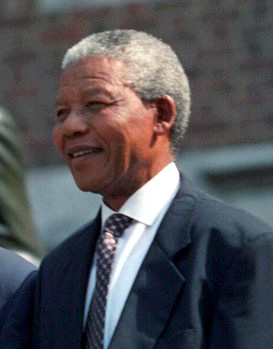
Today is the 20th anniversary of Nelson Mandela's release from prison. 
"For to be free is not merely to cast off one's chains, but to live in a way that respects and enhances the freedom of others." – Mandela
So true. When others are more free, we are less fearful, less covetous, less envious, less defensive, less deceitful, less grudging. Freedom is not zero-sum! More freedom for you doesn't mean less freedom for me, it means more freedom for everyone. This is at the heart of the same-sex marriage issue, among others.

As much as I disagree with much of the libertarian worldview, I do respect their reverence for individual human freedom and self-determination. (Talking about the sincere, consistent libertarians here like Barry Goldwater, Tyler Cowen, even Ron Paul, not the glibertarians.)

Thanks to Elizabeth Wambui for the pointer.

Image: National Archives and Records Administration via Wikimedia Commons.

Tuesday, February 09, 2010

A Few Thoughts on the Problem with Haiti

I just finished reading John Lee Anderson's letter from Haiti in the February 8 issue of The New Yorker, which features a Haitian woman named Nadia and her struggles to find food for her neighbors. It's a little weird that Anderson chooses to focus his piece on a Haitian who grew up in the States (and was deported back to Haiti a few times, following fairly serious run-ins with the law); it's sad that she talks so disparagingly about her neighbors and fellow Haitians (who she says are too lazy to help themselves); and it's shocking that people don't seem shocked by the depths of depravity to which the city has fallen (bodies bulldozed into mass graves, petty thieves summarily executed or left to die, shot and bleeding, as examples to other would-be looters).

When I visited Haiti several years ago for about ten days (while I was working for an international development organization with partners in Haiti) I was shocked at how smoothly things worked given the seemingly insurmountable obstacles, how humanely most people treated one another even under the most inhuman conditions, and how creative, hardworking, and hopeful people were even in the most hopeless situations. (Compare this to folks around these parts who from time to time shoot each other over disagreements in traffic jams or who riot when their favorite sports team wins.)

A friend of mine, a Haitian doctor, is in Haiti now, working for Partners in Health. In the first days after the quake, he and his colleagues were driving back and forth between their family homes in Port au Prince and the PIH hospitals where they worked. Wherever they went they saw Haitians helping one another – digging buried neighbors out of the rubble, providing makeshift medical care, finding food and water. He and his colleagues were distressed to hear that the news was focusing on stories of looters and brewing violence. Driving around in a truck with gringos at all hours of the day and night they saw very few incidents of violence here and there, but the vast majority of people they saw were helping their neighbors, not hurting one another.

It's almost like we need to distance ourselves from Haiti and from Haitians, to say they've failed because they're different from us in some crucial way, or are operating outside of the system we've set up to create prosperity and happiness and success. The reality is that they ARE a part of us and a crucial part of the system we've set up.

Haitians aren't poor because they live outside the system of international trade and international development. They're poor because they've been stuck on the wrong side of international development and international trade since the Haitian slaves had the temerity to rise up and demand their freedom 200+ years ago (with a lot of help from local elites who wanted to duplicate the worst aspects of the French slave society once the French were gone). They're poor because they've been ruled by despots and dictators and demagogues. They're poor because of a long history of U.S. and international occupations – including the ongoing occupation of Haiti by NGOs and aid organizations that have only succeeded in making matters worse for Haitians.

Saturday, January 30, 2010

There's Inventory Growth, and Then There's Economic Growth


I remember Dean Baker or Paul Krugman or somebody talking about how it's important not to be fooled by growth in inventories, which Calculated Risk (CR) mentions also in this helpful post about the recent report that Gross Domestic Product (GDP) zoomed ahead at a 5.6% annualized rate in the fourth quarter of 2009.

That 5.6% growth rate for Q4 did sound faintly ludicrous to me...and CR points out that without what he calls this "transitory" increase in inventories, Q4 annualized growth would have only been 2.3%.

It's nice that businesses feel confident enough to fill up their warehouses again, but it's important to remember they haven't actually sold any of that stuff yet. As CR points out, if personal consumption expenditures don't pick up soon, they won't be selling any of that stuff anytime later, either.

We need a second stimulus, preferably one focused on making our houses and buildings more energy-efficient.

Thanks to Karlissimo del Banco for the pointer.

Image by Matt Wright via a Creative Commons license.

Wednesday, January 27, 2010

Hyperinflation, Chuck? Really?


Via Bleeding Heartland, Iowa Senator Chuck Grassley tells the Des Moines Register that he feels that Fed Chairman Ben Bernanke has been too soft on inflation:
“I’m waiting to see what he says about the fight against inflation,” Grassley said about Bernanke. “And I think we’re in for hyper inflation in a couple years like we had in ‘79 and ‘80, if something isn’t done about it and I’d like to see something.”
This is just bizarre beyond belief. Worrying about "hyperinflation"  when the number of unemployed Americans has doubled in the last two years, is, in a word, goofy.

It's like worrying about the water damage while you're trying to put out a house fire.

It's like thinking about a new layer of shingles while the foundation of your house is crumbling into the ground.

It's like — No, wait. These ho-hum "house similes" just don't quite capture the utter wackiness of Grassley's statement.

How about this: Worrying about hyperinflation now, after two years of the worst economic downturn since the Great Depression, is like worrying that a flock of crazed Canada geese is going to swoop down into Iowa from Minnesota to commandeer all the corn harvesters within a 20-mile radius of Ottumwa, after which this honking gang of super-intelligent goose-fiends organize a mechanized corn harvester batallion to lay waste and destruction to the central Iowa counties of Jasper, Poweshiek, and Story. Could it conceivably happen? Well sure, anything is possible, I suppose. But the chances are so small that worrying about it for even one second would be a waste of time.

I think Grassley tipped his hand when he used the term "hyper inflation." It's so over-the-top that it can't be based on any real, non-ideological analysis of the situation. It sounds to me like a poll-tested scare word, just like his twirl around the dance floor last summer with "death panels."

My well-thumbed copy of The Penguin Dictionary of Economics (Seventh Edition) defines Hyperinflation as follows:
"Very rapid growth in the rate of inflation in which money loses its value to the point where alternative mediums of exchange (e.g. barter or foreign currency) are commonly used." (Italics added.)
Somebody back in my home state needs to hold Grassley accountable for using language like "hyperinflation." Any Iowans out there who want write a letter to the editor? All you'd have to do is quote the definition of hyperinflation I gave above and then ask if Grassley is afraid we will have to start stocking up on gasoline, cooking oil, flour, and Canadian loonies.

What has happened to the cardigan'ed senior Senator from the Great State of Iowa? First death panels, now hyperinflation. The guy used to be kind of a statesman.

Image: 5 Billion Reichsmark Note, Germany, 1928, uploaded to flickr by Adam Crowe and used here via a Creative Commons license.

Tuesday, January 26, 2010

Hayek vs. Keynes Rap

This comes from the Hayek side, which I'm not supposed to like, but I don't care. It's just too awesome not to share.


UPDATE: The PBS Newshour did a nice backgrounder on this rap video, and the Keynes-Hayek debate that it dramatizes, back in December.

Thursday, January 14, 2010

Reply to "Anonymous"

In response to what I thought was a relatively anodyne comment on my cohort Karlissimo del Banco's bold if at times overly ambitious financial regulatory scheme, the aptly-named "Anonymous" chimes in thusly:
I suggest that you take a long hard look at the history of economic development as it relates to human culture. I really don't want to go back through 9th grade "Western Civ" again. The experiment which you propose has been tried again and again, across the globe, always with the result of failure. The nature of a sentient being is to profligate. Right or wrong, your moral determination is misguided. So, there.
And so I pick up this gamely-flung-to-the-ground gauntlet:
Dear Anonymous,
The free market is indeed a marvelous thing. One need only saunter down the aisle of a modern American supermarket to see that: the incredible variety of hyper-palatable food, all produced extremely efficiently on the margin. No, I do not want a panel of commissars deciding how many cans of beans and how many pairs of shoes to produce in a given year. In that, we are in agreement.

You write, "The nature of a sentient being is to profligate." I will grant you that. But good God, man! I submit that we do not want to return to a state of "nature," where after all, life was "nasty, brutish, and short."

The entire history of "Western Civ," as you put it, is the history of restraining the natural urges of men to profligate. Remove those constraints, and it is back to "might makes right."

Now perhaps you are reasonably well-preserved and under such a brute-strength regime you may well prosper. But I for one do not yearn for a return to our arboreal home. I rather enjoy the "inefficiencies" of the modern welfare state, including clean food, water, and air, relatively well-regulated markets, a reasonably secure, if small, old-age allowance via Social Security, and so on.

I need not grant that the libertarian tradition is an honorable one — it defends itself. Individual human freedom is obviously a worthy ideal to safeguard; indeed it is the pre-eminent ideal. "Freedom," as hollered by Mel Gibson in "Braveheart," does, legitimately, move men to lay down their lives. But in the real 21st-century world, we must balance competing interests. Make compromises. For me, Canada — with its universal health care and its status as the spawning ground for SCTV, Mike Myers, Rush, Rich Little, and countless other vital cultural touchstones — is a worthy, and most importantly for us in the United States, conceivable, model.

Presumably you have in mind a different ideal society. I welcome your thoughts on what that might look like, and how might we arrive there.
Very truly yours,
M. Rondin de Fromage

Tuesday, January 12, 2010

Bonds. Cheese Bonds.


I just bought three Cheese Bonds from Wendy Levy, a.k.a. the Cheese Snob, to help her fund Curds and Whey, her soon-to-be cheese and tea shop in Jersey City, New Jersey.

The bonds have a face value of $10.00, redeemable in cheese and/or tea, and she's selling them for $9.00 each. That's an 11% payback right there. Plus, the bonds are callable at any time, so if I cash them in in three months, that's a roughly 44% annual return.

Of course, that 44% is not risk-adjusted. But I've been watching Ms. Levy from afar for a while. She has been methodically planning this store for over a year. There are lots of ducks, and yet they are all in their row. I am going to get my cheese.

Also, it is true that cheese and tea are a bit less liquid than cash, so I should probably throw in a little liquidity discount there as well to adjust my expected return. And then, opportunity costs: Is cheese-and-tea really the best use of my $27?*

But even given all that, we're still talking north of a 30% annual return: Beat that, Bank of America! (On second thought, Bank of America, don't try to beat that...maybe just stick to savings accounts and stuff like that for a while.)

For more info: The Roquefort Files.

*Well I do love cheese — and tea! And my household consumes quite a bit of both. Plus as I have entered my dotage, I have become a bit of an epicurean in matters gastronomic (and sartorial), so my utility function has changed from five or so years ago. In short: Yes. This is the best possible use of my marginal $27.00. You have my word on it.

New Sheriff in Town...


01:00 hours brainstorm...how to reform the financial sector:

1) repeal the Gramm-Leach-Bliley Act; let's make sure that commercial banks are never again allowed to trade securities.
2) Ban all forms of derivatives. No exceptions.
3) All revenue from speculative trading is taxed at 90%.
4) All hedge fund revenue is taxed as normal income, NOT capital gains.
5) All bank and investment firm CEO compensation (cash and stocks) capped at $500,000 (any dollar above that amount is taxed at 100%).
6) Feds regulate lending:capital ratios for commercial banks; if that ratio falls below an agreed minimum, bank is charged a hefty daily fine for every day when that ratio is below the required level.
7) Enforce anti-trust laws and break up financial oligopolies. If it's "too big to fail", then it's "too big to exist"!
8) All members of all House and Senate banking and financial committees are banned from receiving any donations from the financial lobbying industry.
9) The Treasury Secretary can never be an ex-financial sector employee.

I'll think of more stuff later...

Monday, January 04, 2010

The Piano Bench Conundrum


The Piano Bench Conundrum dates back to the mid-nineteenth century, when pianos first began appearing in the parlors of prosperous middle-class homes. The Conundrum relates to the fact that while one is sitting on a piano bench, the sheet music stored inside the bench, beneath the hinged seat, is inaccessible.

If the person playing the piano wants a piece of sheet music that is stored in the bench, he or she must first stop playing, stand up, turn around, open the bench, and then hold the lid open with one hand while leafing through the sheet music with the other. Or, the pianist can attempt to open the bench and hope that it stays open on its own while using both hands to search for the desired sheet music, though this technique carries the risk that the bench seat will fall on the pianist's hands, rendering them inoperable in the short term for piano playing or much else. In either case, the pianist must reverse the entire process before he or she can begin playing again. As the time expended to retrieve additional sheet music is totally unproductive from the perspective of someone deriving utility from playing and/or listening to piano music, we can safely classify the imputed value of that time as a dead-weight loss.

Normally, in a free market, such an inefficiency would be expected to attract a variety of potential solutions from entrepreneurs hoping to "cash in" by providing an easier way to retrieve sheet music. Yet despite substantial innovation in recent decades in the realms of both interior furniture and musical instruments, the Piano Bench Conundrum continues to plague the home pianist and the concert virtuoso alike.

Monday, December 14, 2009

Money, That's What I Want

BPS RESEARCH DIGEST: People think that money affects happiness more than it really does
The study worked by asking people what their own income and happiness levels were and then asking them to estimate the happiness of people on lower or higher incomes than themselves. The participants' estimates of the happiness of people on high incomes was largely accurate, but they massively underestimated the happiness of people on lower incomes. The picture was the same in a second study that asked people to estimate how happy they'd be if they earned more or less than they really did.
The results of this study strike me as plausible. This has implications for politics on both the left and the right.

Lefties tend to overestimate the immiseration of the proletariat.

And free-market types on the right tend to over-estimate the incentive effect of additional income, especially when traded for free time.

Hat tip: Patrick Appel at the Daily Dish.

Thursday, October 15, 2009

Where Would a Do-Gooder Do the Most Good if a Do-Gooder Could Do Good?

This is a question that I have been asking myself on and off for my entire adult life. Alex Tabarrok asks the question (originally posed by one of his readers) on his blog. The answers from the various commenters are interesting and for the most part refreshingly free of cant.

This strikes me as the right kind of question do-gooders and would-be do-gooders should be asking themselves, even if it is impossible to come up with the correct answer in a reasonable amount of time.

Tuesday, October 13, 2009

Mitigating the Tragedy of the Commons

Vernon Smith explains on Forbes.com how Elinor Ostrom, one of the two Nobel Economics Prize winners, focuses on the surprising success that various groups of people over the years have had in avoiding the "tragedy of the commons." She indicates there may be a way around this age-old resource management problem which involves neither pure privatization nor pure socialization.

Friday, September 19, 2008

The Free! Enterprise! System!

This is from February 2008, when the Bank of England nationalized – ahem, nationalised – Northern Rock Bank, but pretty much all of it applies to the U.S. banking system over the last two weeks.

Thursday, July 31, 2008

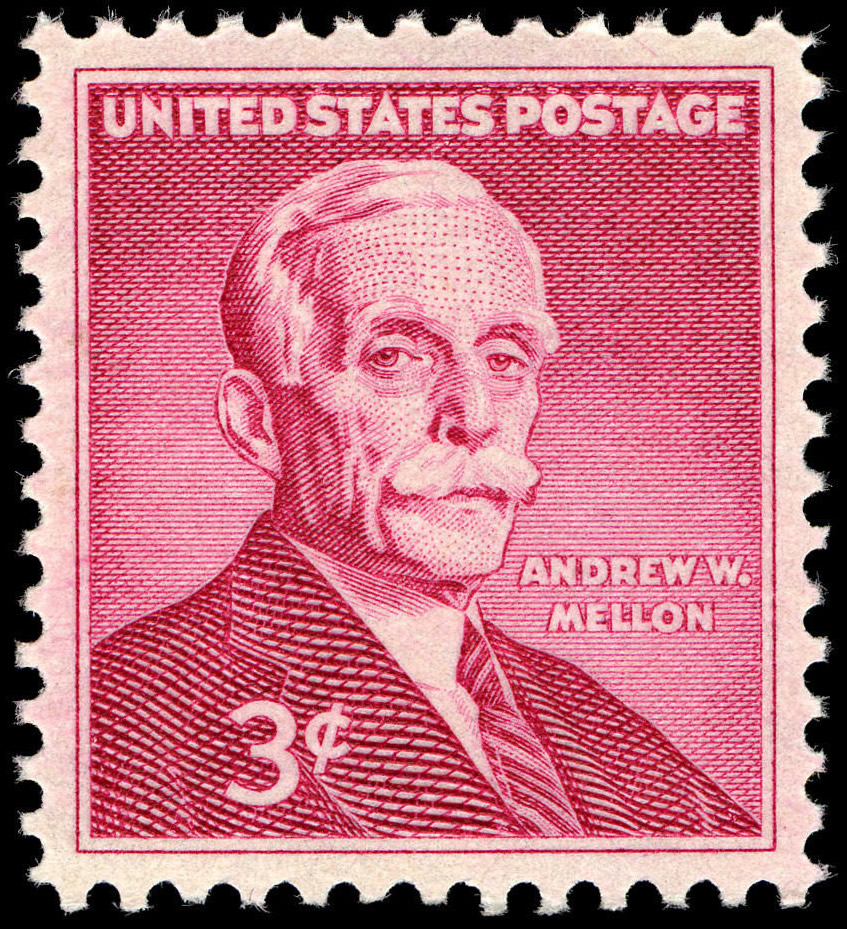
Andrew Mellon: Friend of Tax Fairness


In his 1924 classic Taxation: The People's Business, Treasury Secretary Andrew Mellon wrote:
“The history of taxation shows that taxes which are inherently excessive are not paid. The high rates inevitably put pressure upon the taxpayer to withdraw his capital from productive business."
Key words here: inherently excessive. That's obviously in the eye of the beholder.

But he also wrote:
“The fairness of taxing more lightly income from wages, salaries or from investments is beyond question. In the first case, the income is uncertain and limited in duration; sickness or death destroys it and old age diminishes it; in the other, the source of income continues; the income may be disposed of during a man’s life and it descends to his heirs. Surely we can afford to make a distinction between the people whose only capital is their mettle and physical energy and the people whose income is derived from investments. Such a distinction would mean much to millions of American workers and would be an added inspiration to the man who must provide a competence during his few productive years to care for himself and his family when his earnings capacity is at an end.”
So explain to me and Andy again why we tax capital gains and "carried interest" at 15% while nurses and office managers are taxed at a marginal federal rate of 43% (28% + 15.3% FICA tax)?

Is it that now that we have Social Security for workers, we need to give owners a little Investor Security as well, or what?

Friday, July 18, 2008

Marginal Tax Rates

Following up on "Alex's" comment on the results of my cleaning study, let's turn now to the real Laffer Curve, which holds that there is a theoretical optimum marginal tax rate (if by optimum you mean revenue-maximizing). Too low, and you give up tax revenue that people would otherwise be willing (if not necessarily happy) to pay; too high, and people theoretically would slow down or stop working or investing, so there is less money made and taxed.

Certainly at 100% tax rate there would be no point in working, unless sustenance was provided by the state. For all but the most patriotic people, however, this amounts to slave labor, and such a regime would tend to be violently coercive.

Rather than get into trying to figure out what the optimum marginal tax rate is, I want to focus on an oft-repeated line from billionaire investor Warren Buffett. Here he is in a recent interview with Tom Brokaw:
Tom, I've been around rich people all my life. And I have seen capital gains taxes close to 40 percent. No one went home at 3 in the afternoon and said, "I've worked enough, and because tax rates are so high, I think I'll-- I'll go to the movies." ... I've been managing capital for 50 years for other people. No one left and said, you know, "This-- the taxation system's too tough. I-- I think I'll just stick it all under my mattress." They can't stick under their mattress. They're going to invest their money regardless.
This sounds good, but I wonder if it is really true. First, Buffett is conflating working and investment a little bit here. Certainly there are investments, especially hot-money financial investments (as opposed to cold-money capital investments like building a factory), that are especially sensitive to the tax rate. While Buffett is right that a financier won't stick her money in a mattress, a given tax rate might induce her to keep it in cash equivalents instead of taking a flyer on a new venture. None of this has anything to do with "working."

As for "working," I wonder: Has there really never been someone who took a look at the tax rate and decided it wasn't worth it to work an extra hour? Probably not, especially recently, with the top marginal tax rates at historically low levels, particularly on income from capital. But, it would only take one tax-deterred worker to falsify Buffett's claim, at least if we take the guy's word for it that he stopped working because of high taxes and for no other reason.

On the other hand, it would also be easy for someone to blame the tax system for making him stop working when he was actually just bored or lazy.
Related Posts with Thumbnails